NOte
YEAR
2026
CLIENT
N0te — Self-initiated Product
ROLE
Founder, Product Designer & AI-Assisted Builder
IMPACT
Created N0te from zero to one: a floating, liquid-glass macOS app that helps vibe coders and fast-moving builders capture thoughts, voice notes, and screenshots without leaving their workflow, then export everything to Obsidian as clean Markdown.
Designed and built the product end-to-end using Codex inside Google Antigravity and Claude Code inside Cursor, spanning product strategy, PRD development, Figma exploration, SwiftUI polish, bug testing, and the launch marketing site.
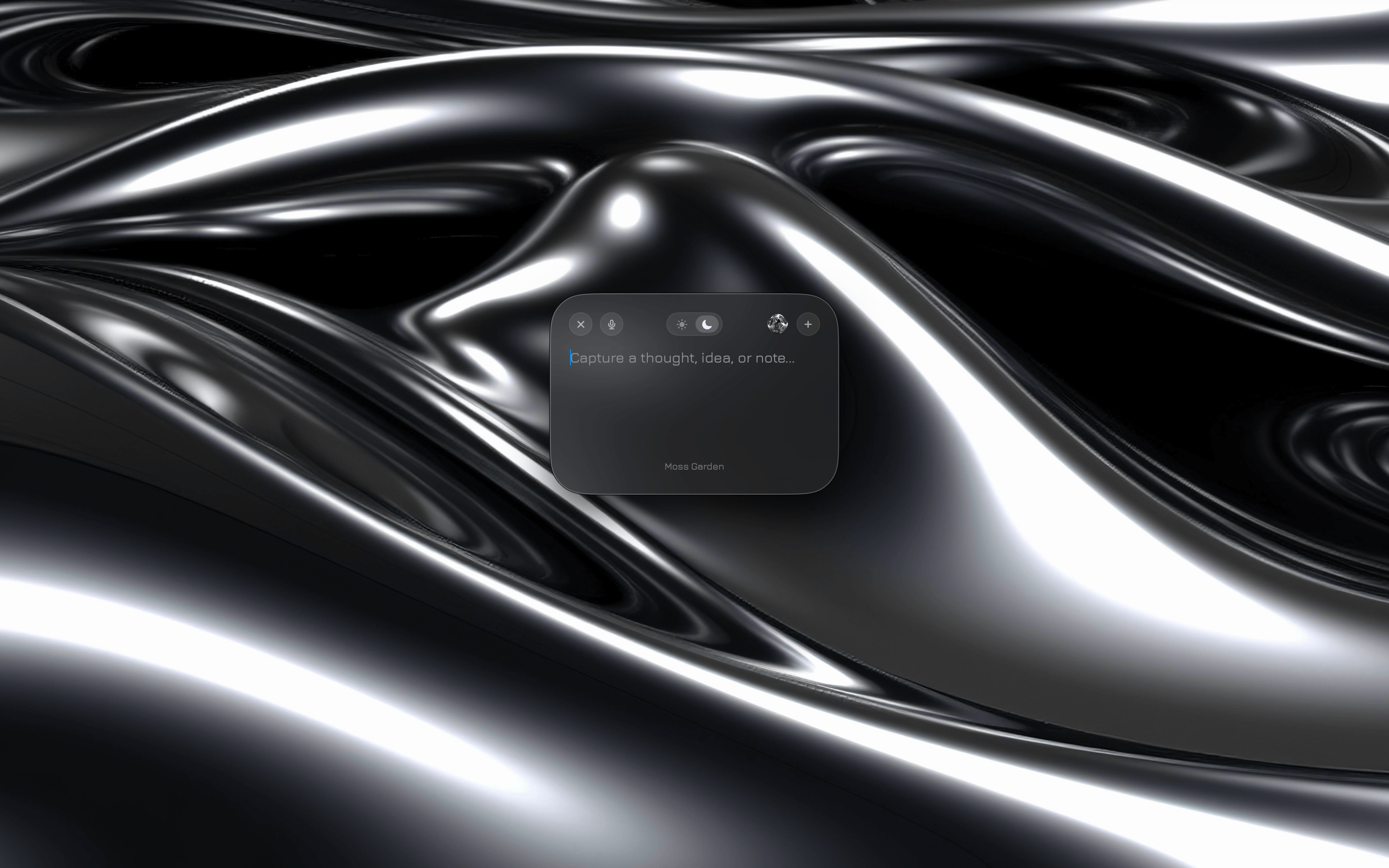
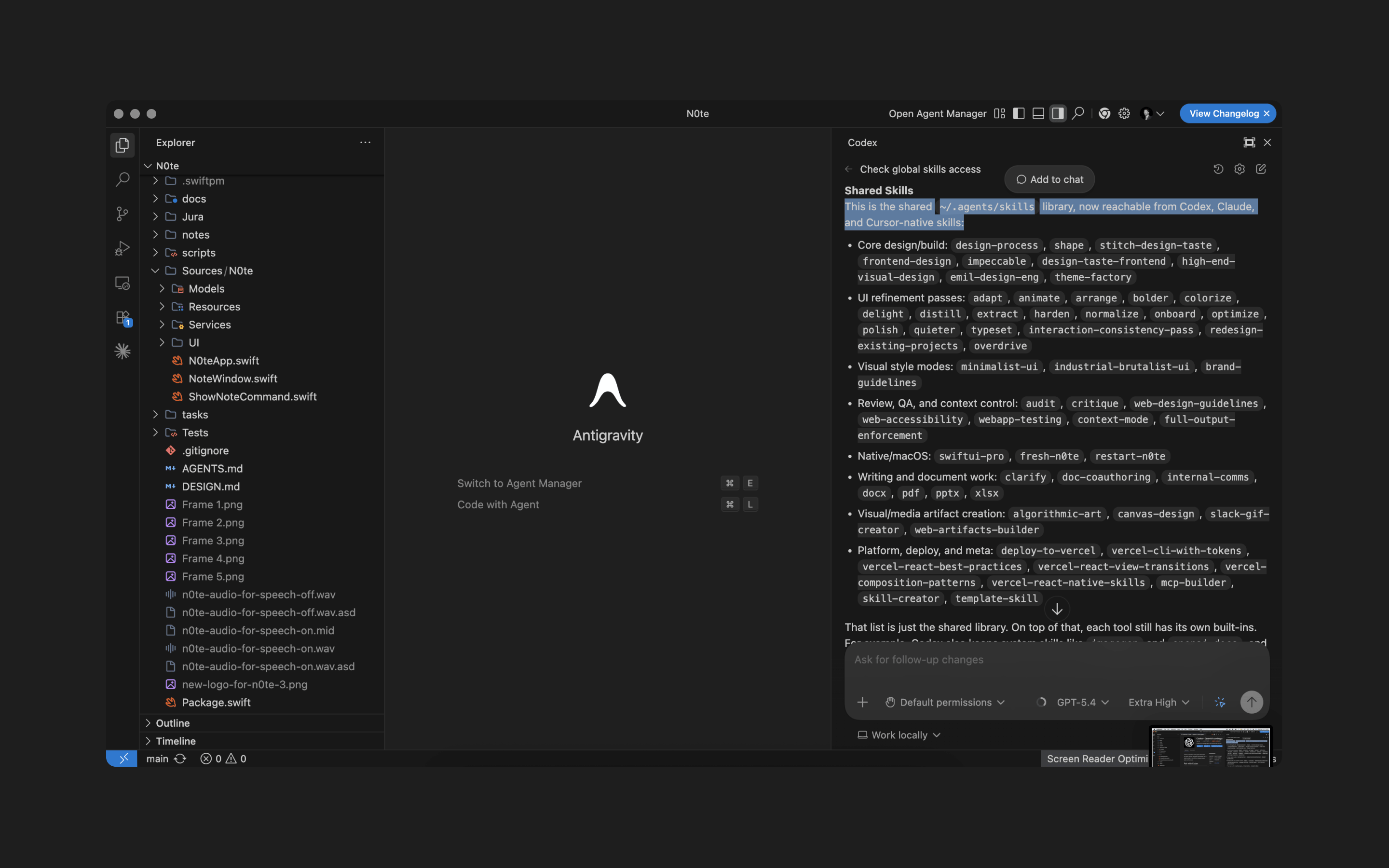
I began by creating and adding global skills that could be utalized during agentic coding sessions for both Codex and Claude Code. This ensured that I only had to add skills once globally and reference /call upon them when needed using any AI agent.
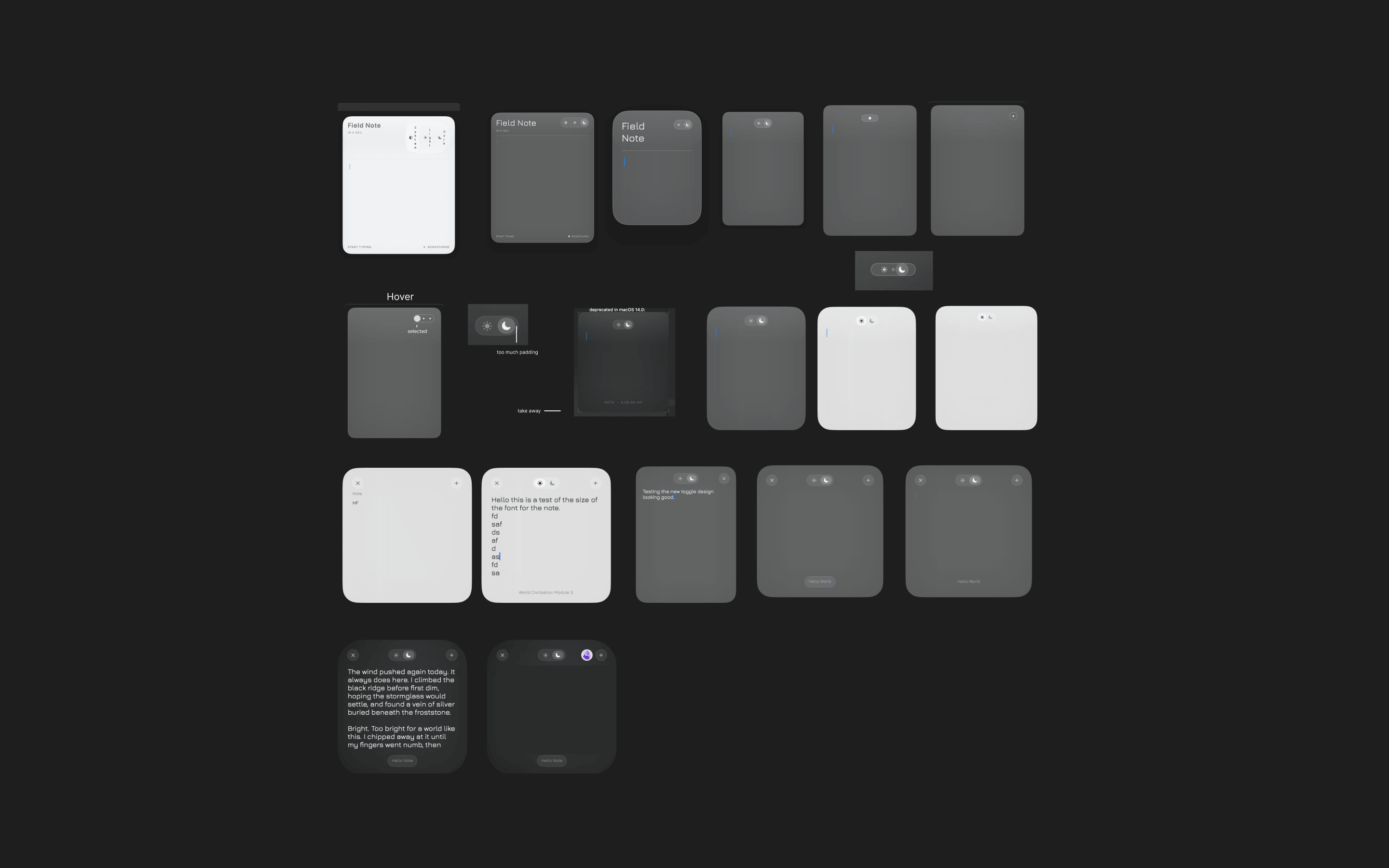
Initial designs that were created for N0te with Codex.
I began to explore vision further, and soon had a brand voice / style. I knew that I wanted to lean into the liquid glass look / feel in order to make my app as non-intrusive as possible, and beautiful enough to keep open.
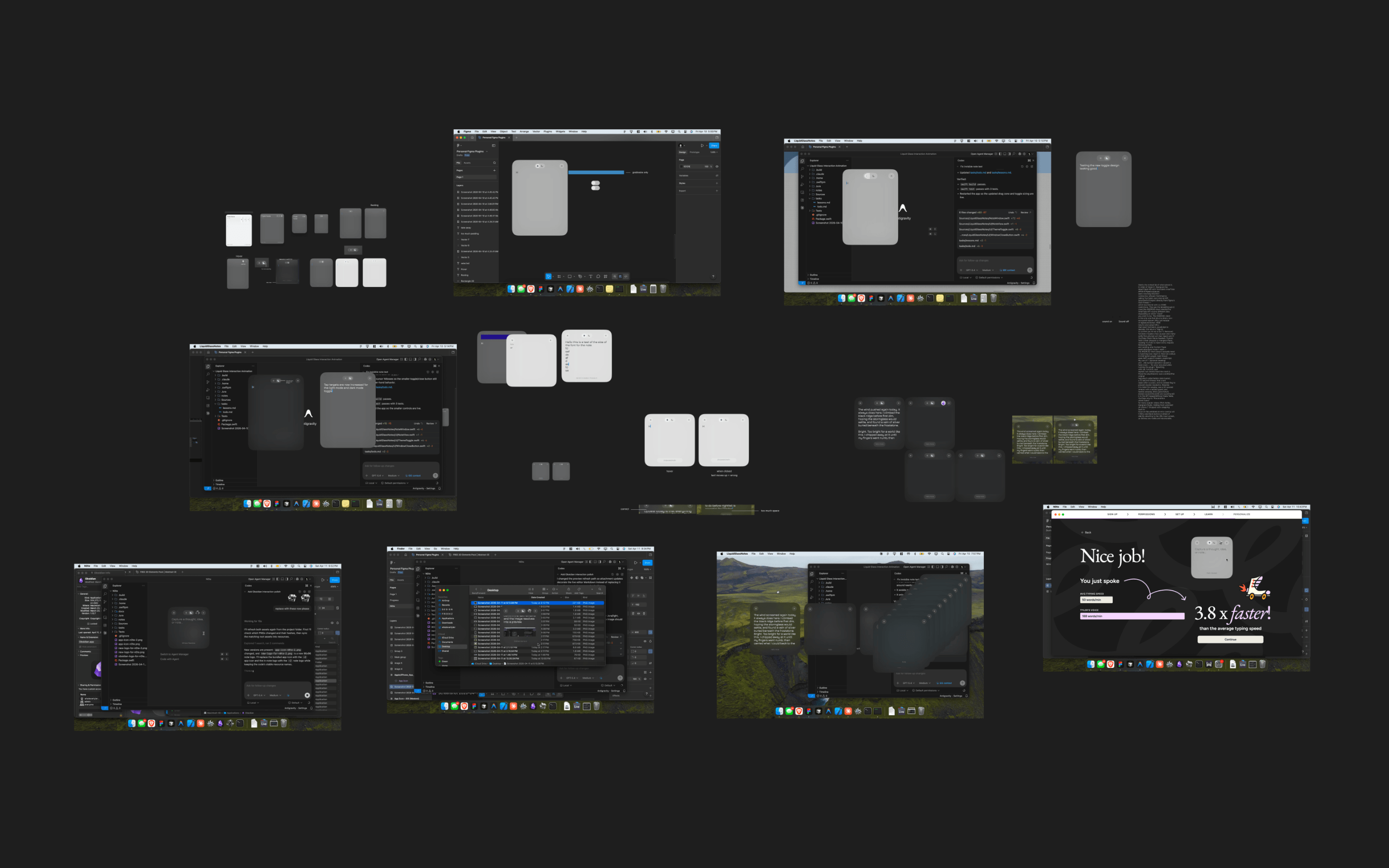
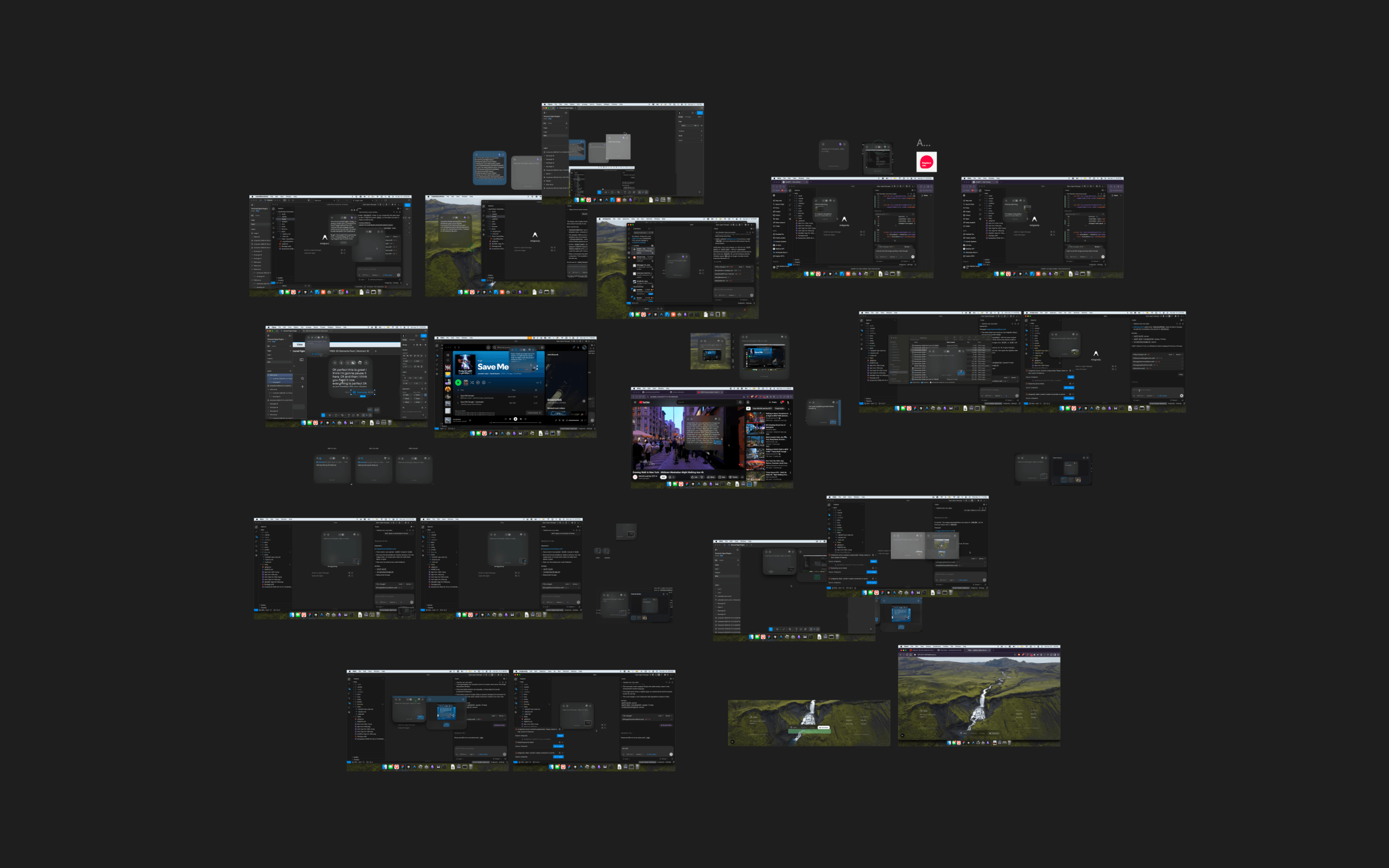
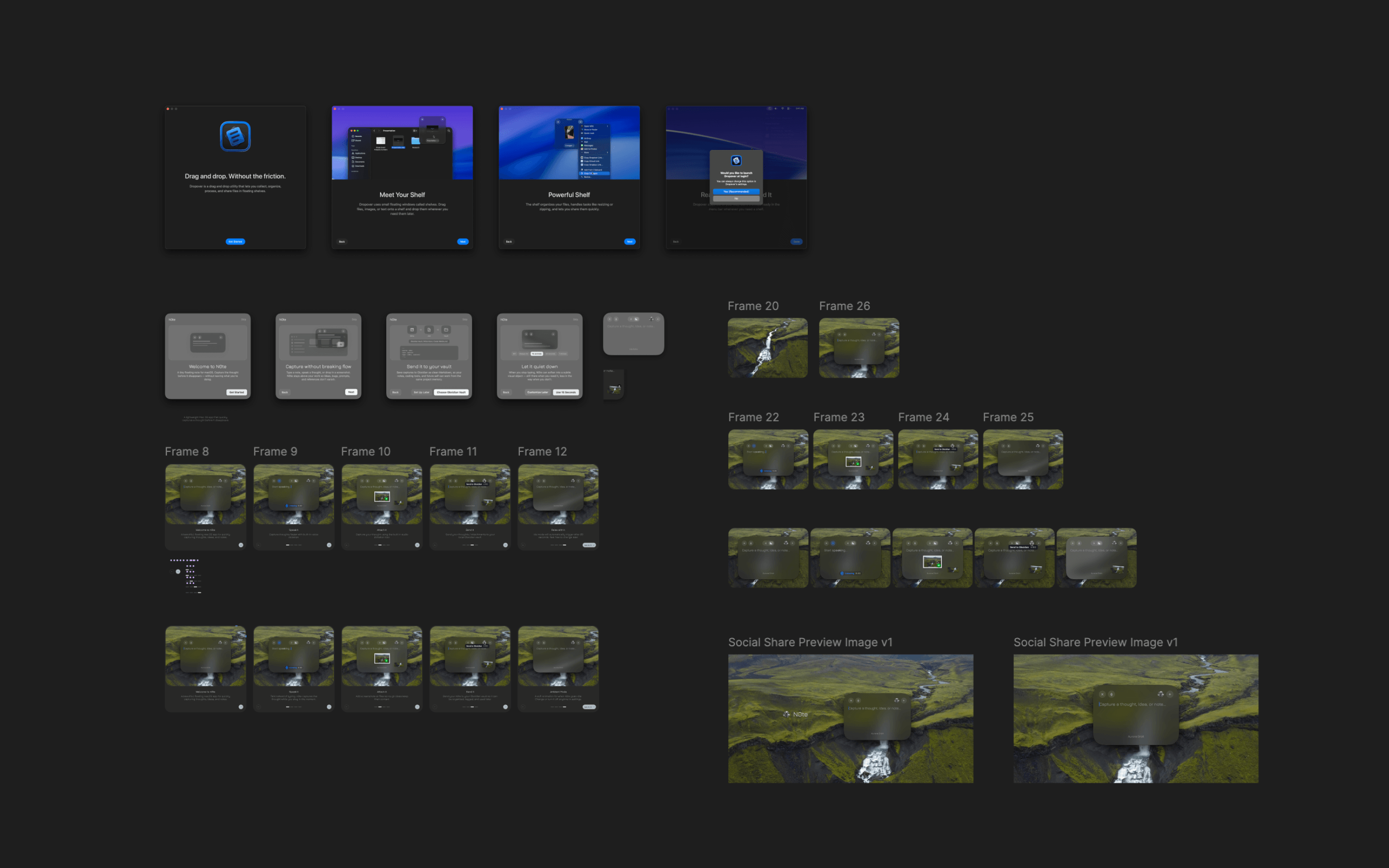
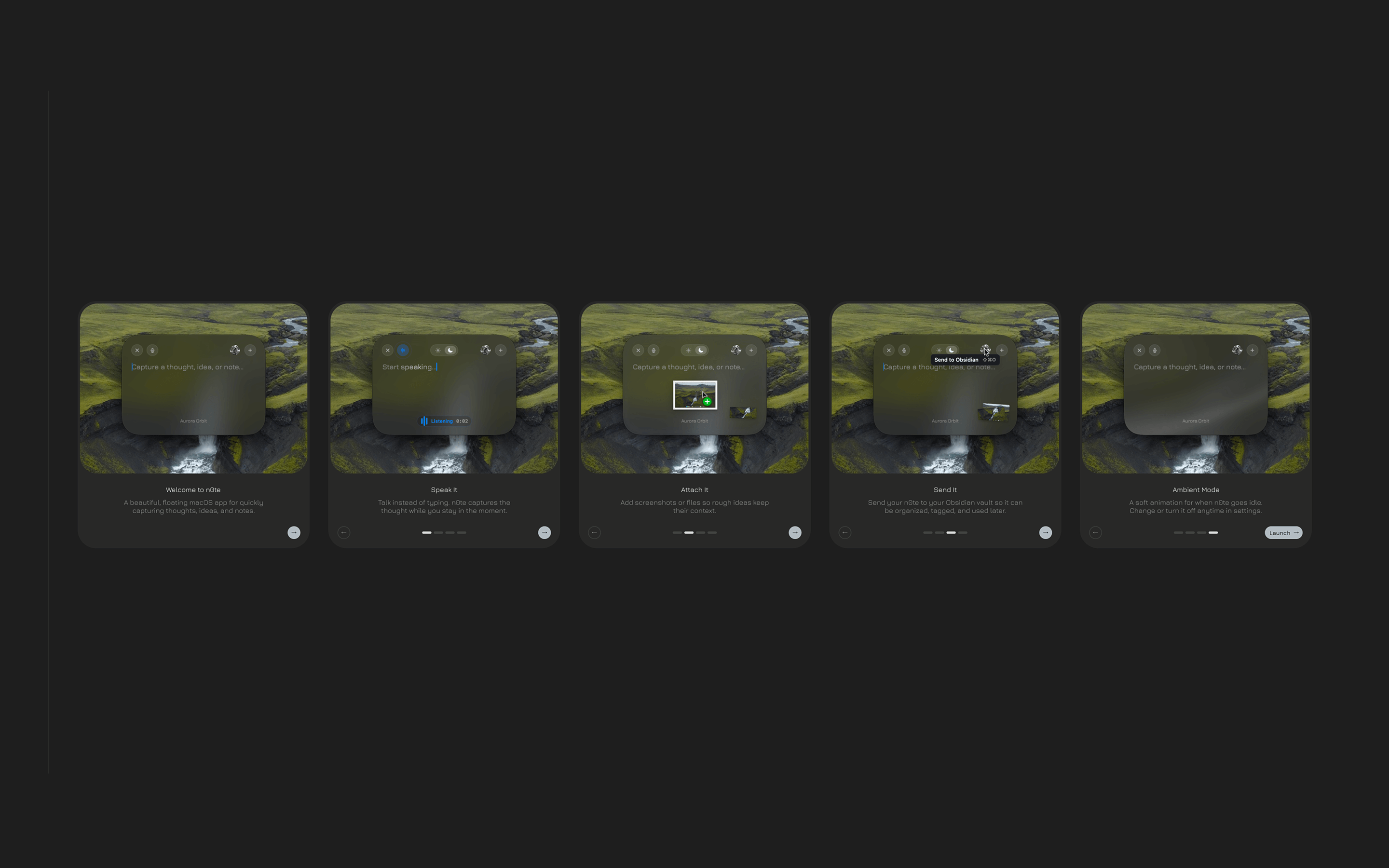
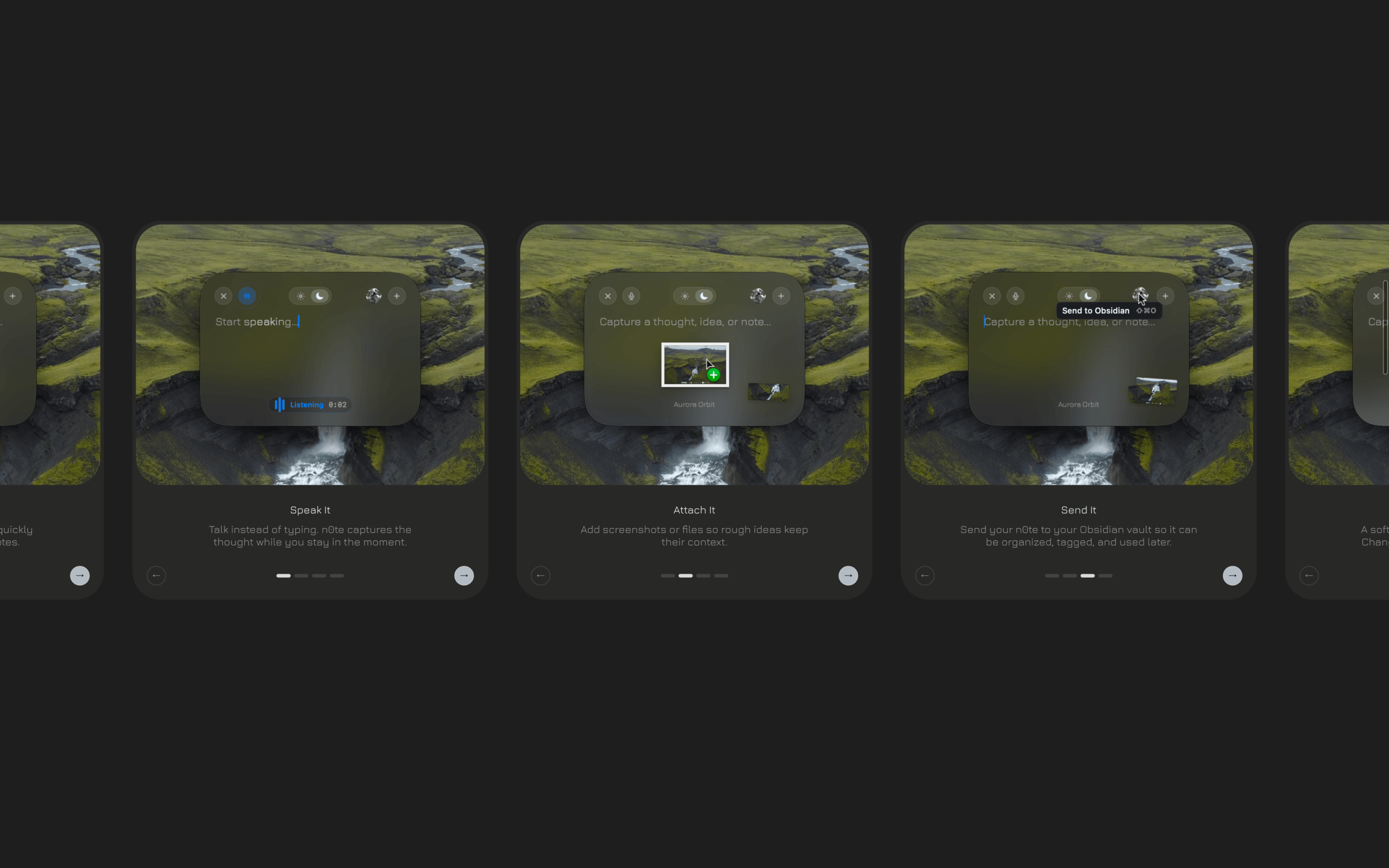
Created an onboarding flow after running competetive analysis' for a few other similar products in the space. The key was to make this short and interactive, enticing users to watn to click through.
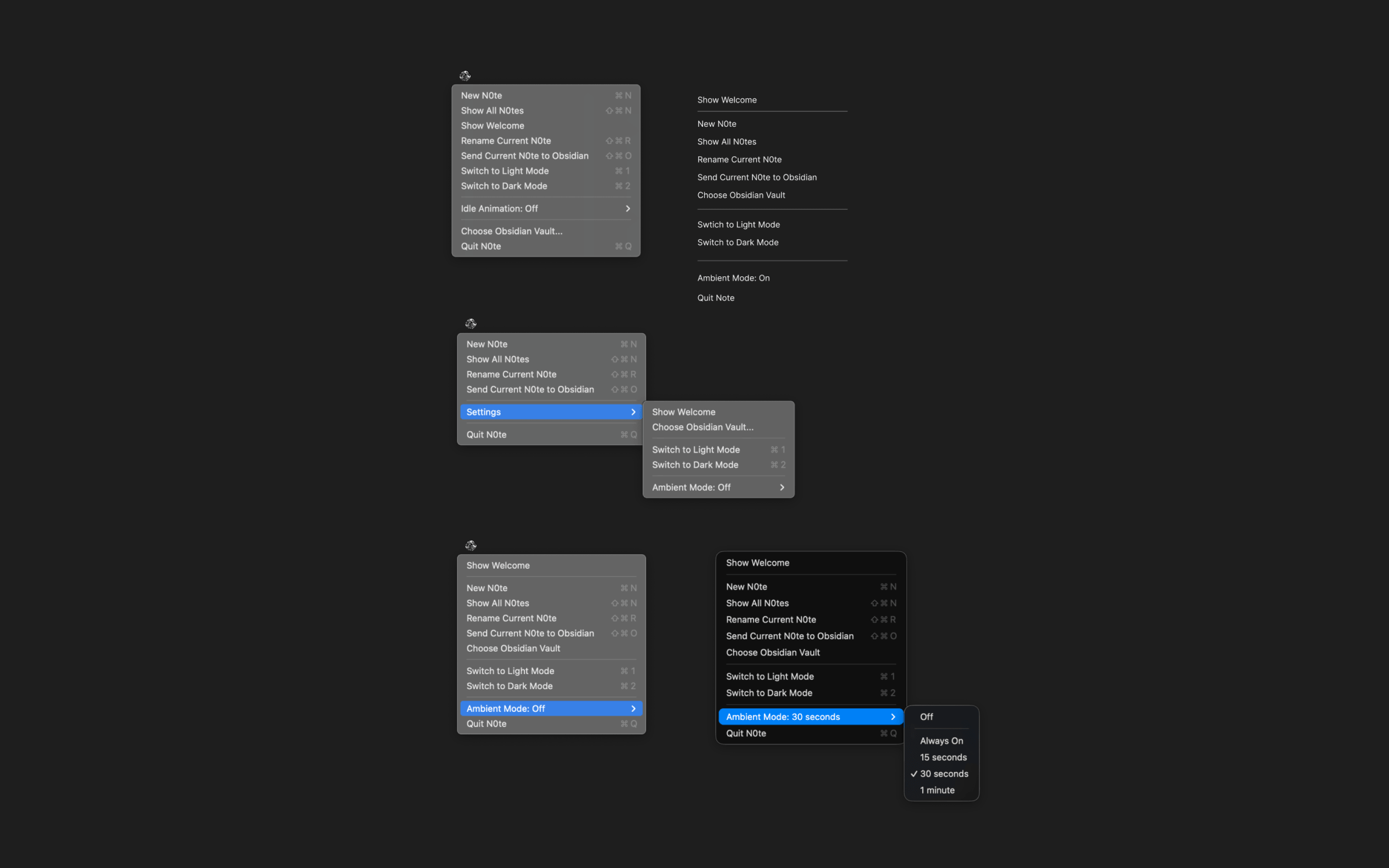
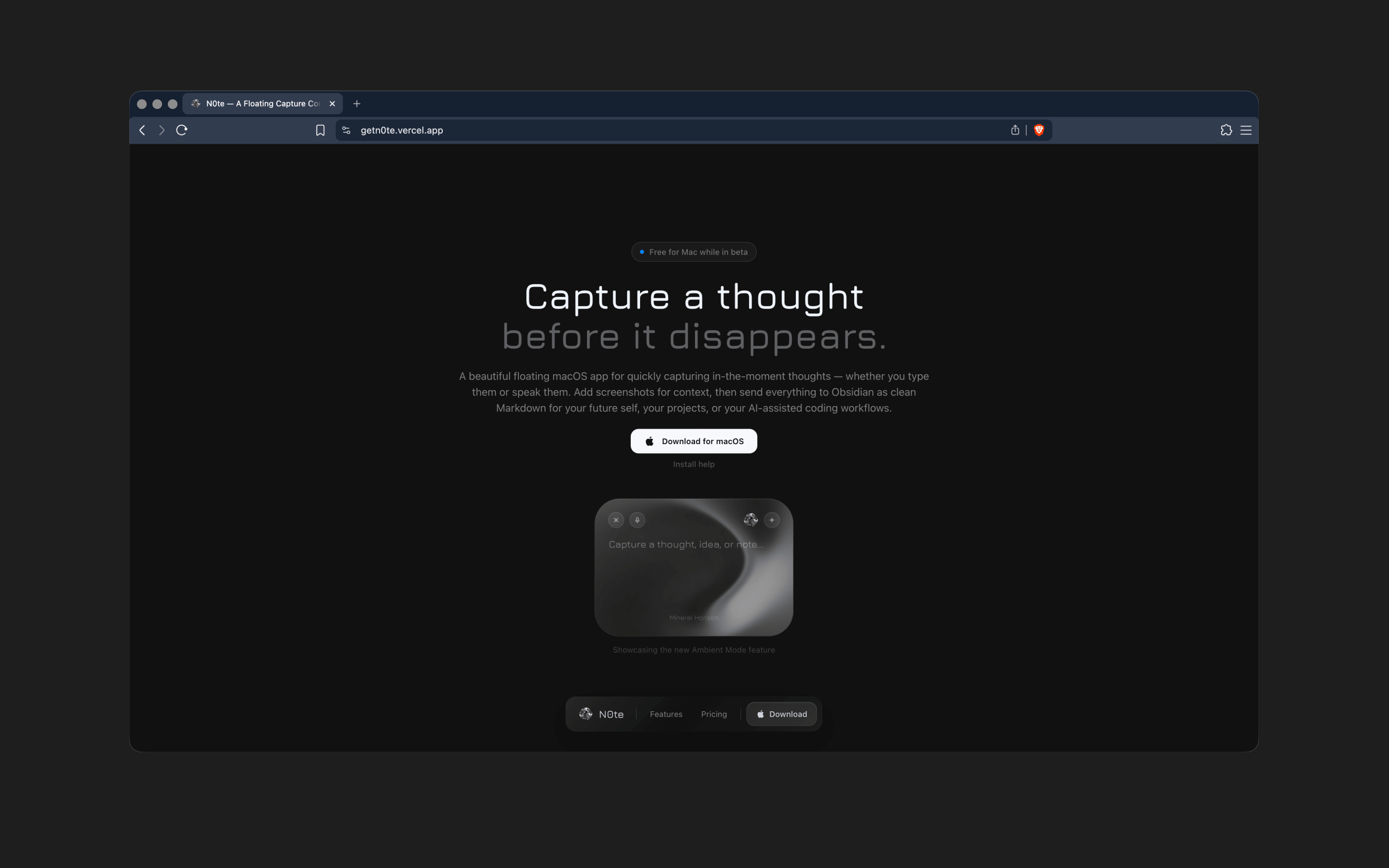
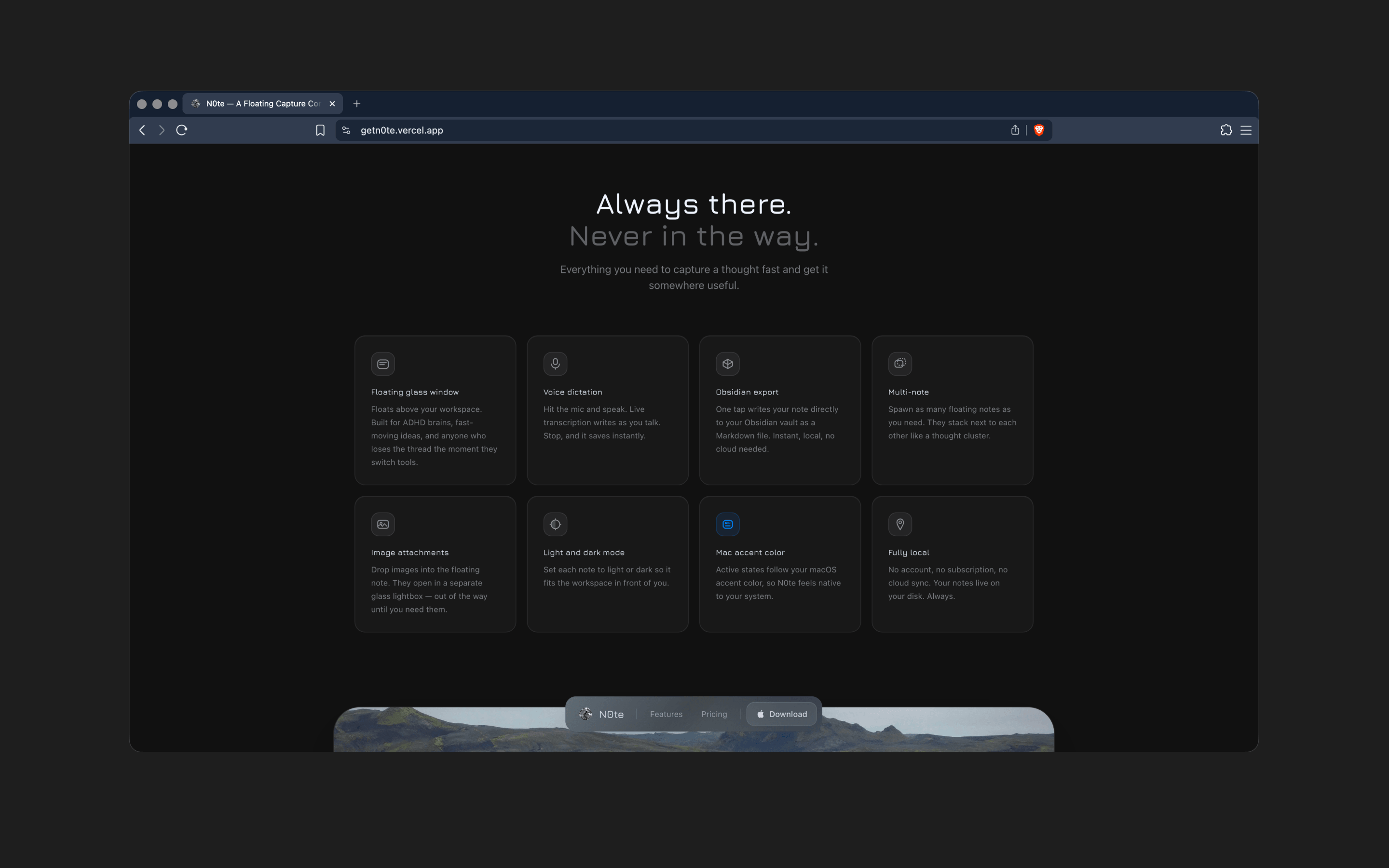
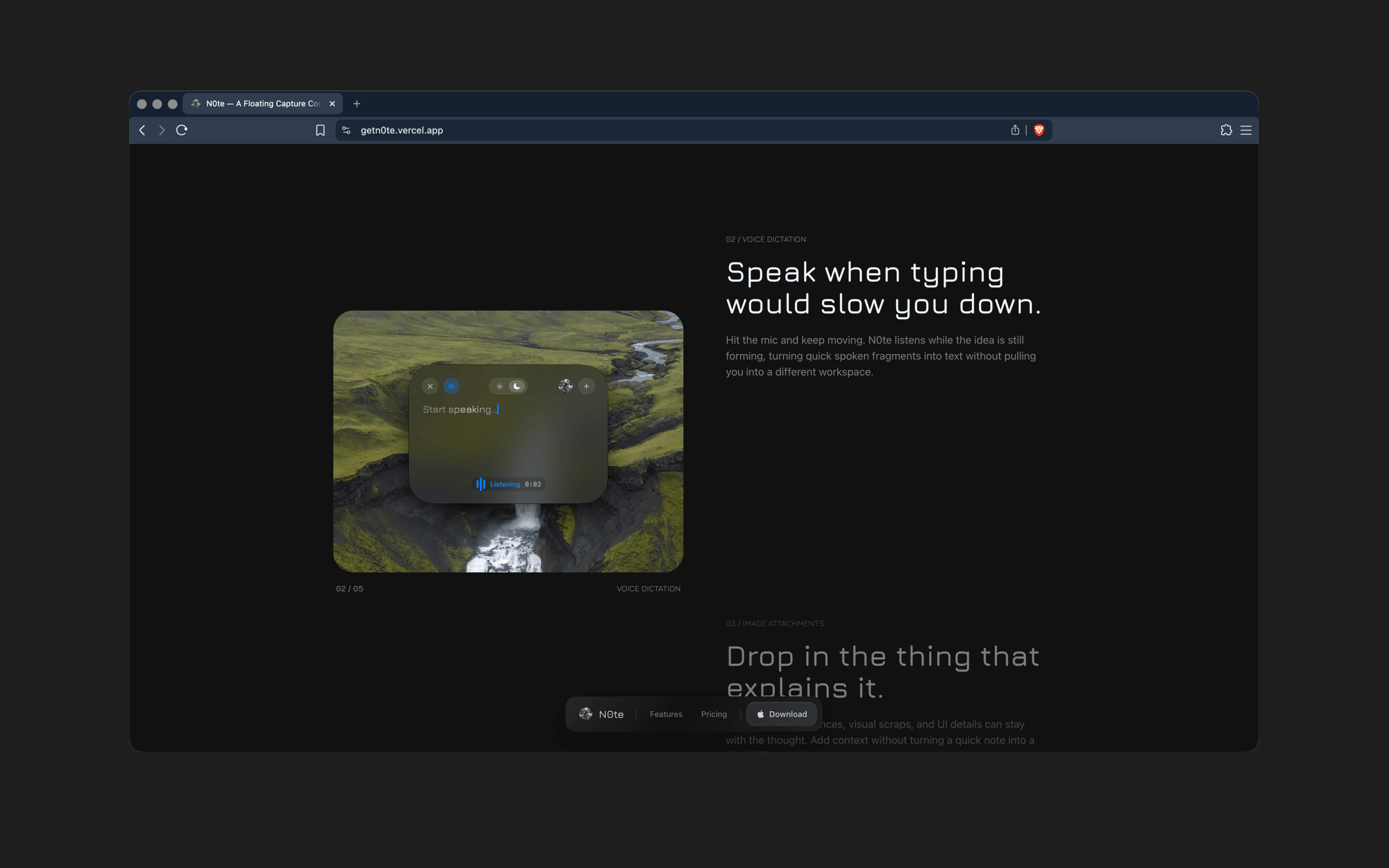
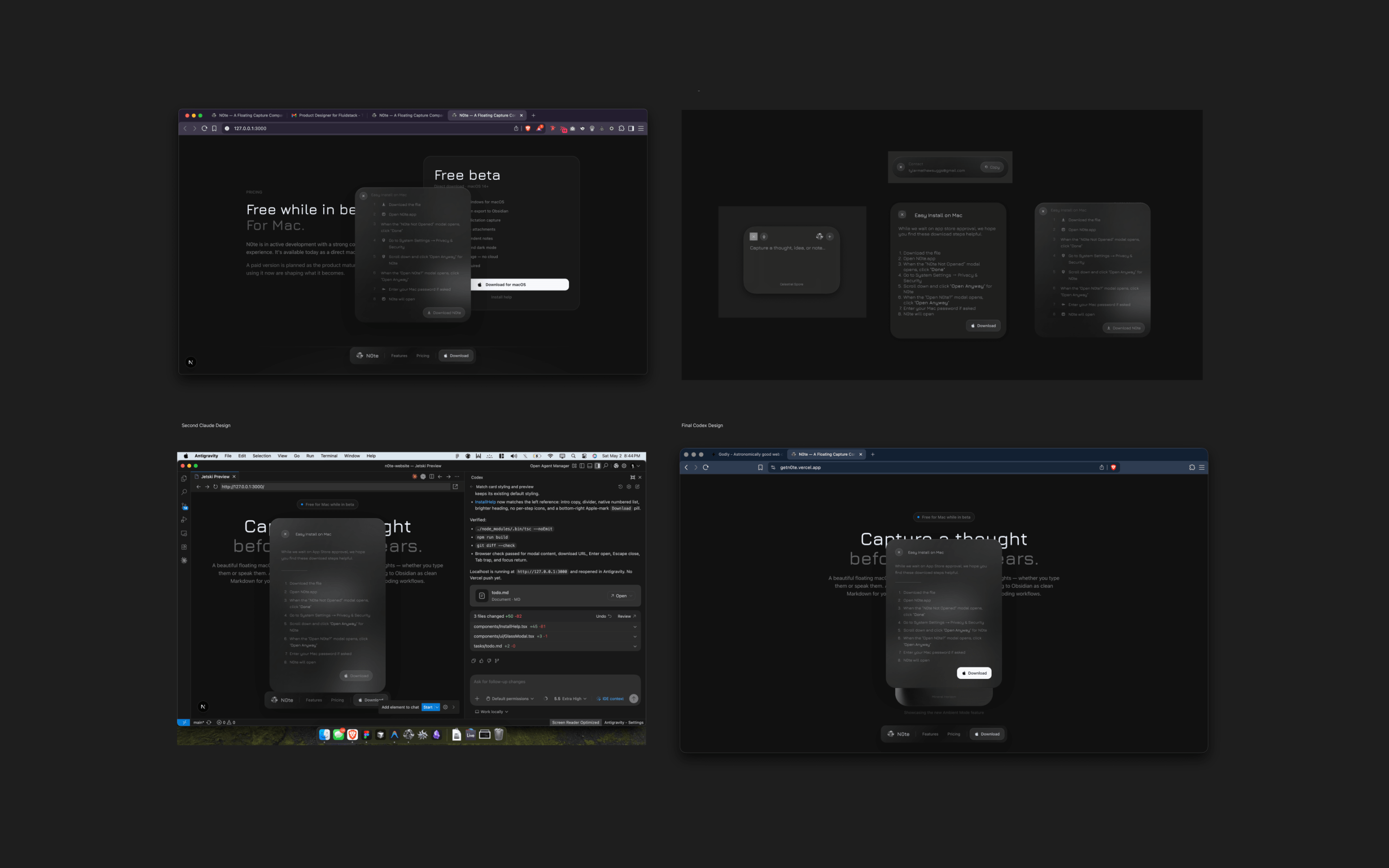
Used Cluade Code to build the app's marketing website instead of OpenAI Codex to test different agentic outputs.
Worked on fringe / niche use cases such as how to install
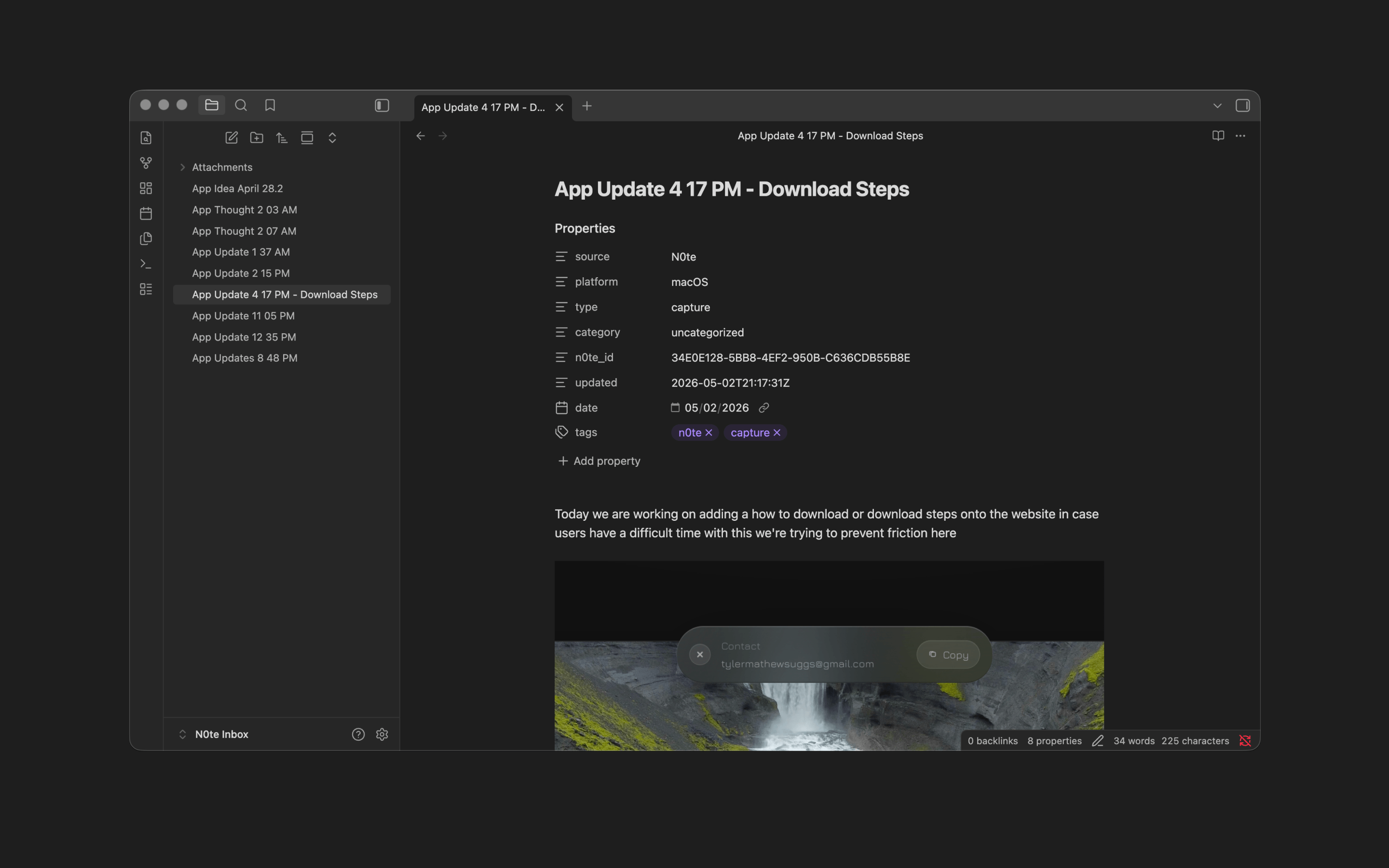
Once the beta was stable enough, I started using it to keep track of my progress / daily syncs.
PROJECT DESCRIPTION
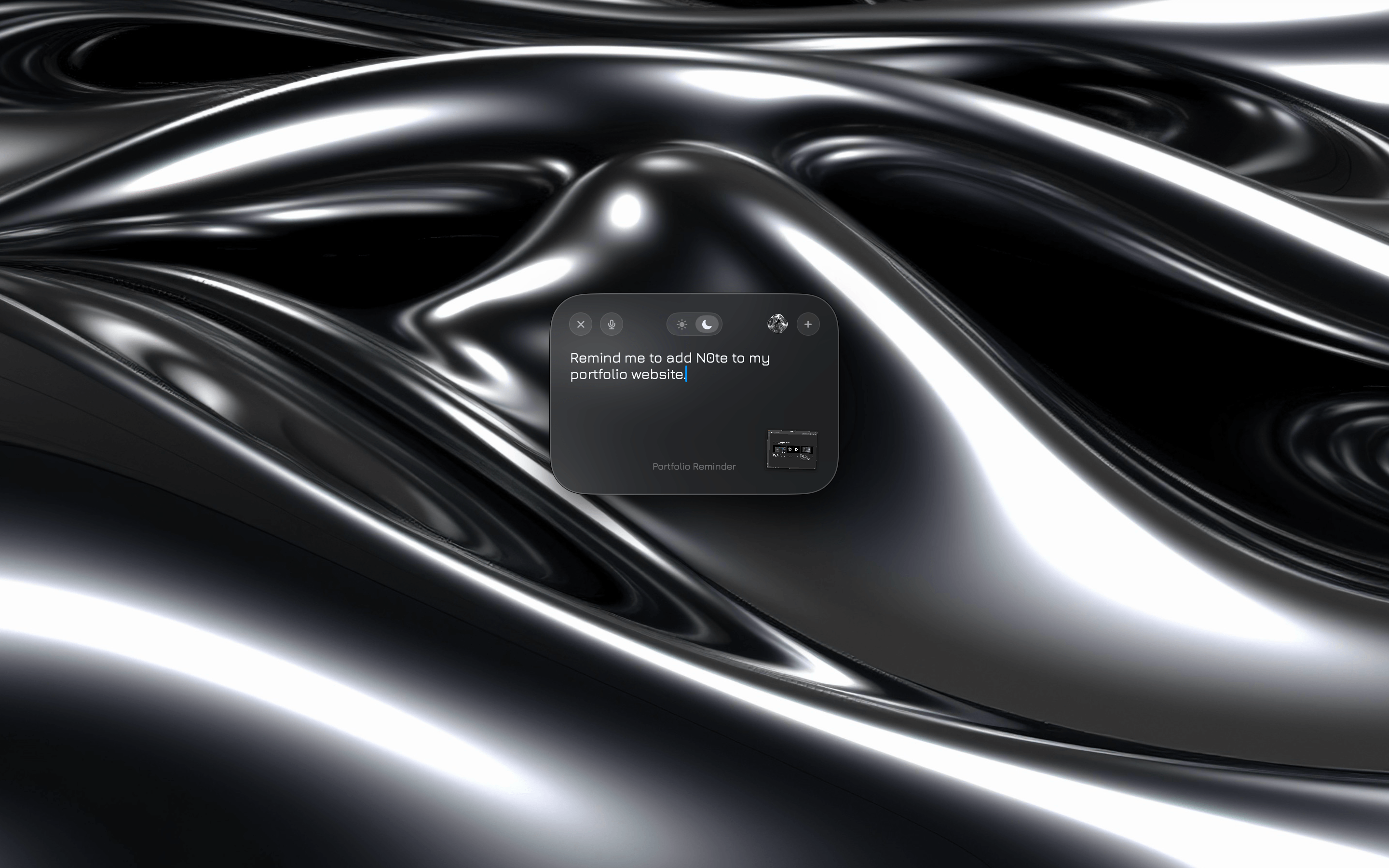
N0te is a self-initiated macOS app I created from zero to one for vibe coders, Obsidian users, and AI-assisted builders who need to capture thoughts without breaking flow.The app stays floating above the workspace as a semi-transparent, liquid-glass capture surface, making it easy to type a thought, dictate a voice note, add screenshots for context, and export everything to Obsidian as clean Markdown.The project also became an experiment in AI-native product development. I built across Codex inside Google Antigravity and Claude Code inside Cursor to compare speed, output quality, planning depth, design polish, and overall workflow friction.
TL:DR:
N0te shows how I approach zero-to-one product work: identify a real workflow bottleneck, design a focused solution, use AI agents to accelerate execution, and still protect usability, craft, and product taste.This project demonstrates my ability to move across product strategy, UX, visual design, technical implementation, QA, and go-to-market thinking while using modern AI tools as true product-building partners.
Problem:
Every switch costs a thought. For builders using Obsidian as a lightweight knowledge layer, the capture flow is still too slow: open the app, find the right folder, create a note, name the file, then start writing. By then, the detail that made the thought valuable can already fade.N0te removes the friction before Obsidian by keeping a capture surface ready in the user’s workspace.
My Role:
I owned the full product process, including research, product strategy, PRD development, Figma exploration, AI-assisted implementation, visual design, QA, marketing site creation, and early go-to-market validation.
Research & Strategy:
I started with a PRD focused on user behavior, platform fit, and the growing use of Markdown files in agentic coding workflows.The research covered core personas, jobs-to-be-done, Obsidian capture friction, macOS-first platform rationale, competitive patterns, technical feasibility, and early success signals such as time-to-capture, export reliability, repeat usage, downloads, and user feedback.This helped position N0te as more than a simple note box. It became a focused solution for a specific behavioral bottleneck: capturing useful thoughts fast enough for them to stay useful.
Design & Build Process:
I began with a rough Figma concept to establish the shape, tone, and interaction model. From there, I used the PRD to guide an agentic build process across Codex and Claude Code.The design improved through fast screenshot-based iteration. I used natural-language feedback to tune the interface: darker surfaces, softer blur, better transparency, refined SwiftUI icons, cleaner hierarchy, and more Mac-native visual polish.Screenshots became one of the most useful parts of the workflow because they gave the agents direct visual context. Instead of describing an issue abstractly, I could show the current state and guide the next iteration with much more precision.
AI-Assisted Workflow:
I used curated .agent skills for front-end design, motion, and visual polish to help shape the product beyond a basic utility interface.I also relied heavily on Plan Mode, which helped the agents pause before implementation, ask clarifying questions, outline tradeoffs, and suggest better paths forward. That made the workflow feel less like prompting a code generator and more like collaborating with a design-minded engineering partner.The agents also helped surface product decisions earlier, such as whether to use native SwiftUI icons or custom icons, how to balance short-term speed with long-term cross-platform flexibility, and how to preserve a Mac-native feel while planning for future Windows support.
QA & Polish:
I manually tested the app across normal flows, edge cases, and intentionally awkward usage patterns to find where the experience broke down.I documented issues with screenshots, recordings, and notes, then worked through fixes with Codex and Claude Code. Some bugs took minutes; others required longer debugging sessions.The goal was to balance speed with craft. Because N0te lives directly on top of the user’s workspace, it needed to feel lightweight, useful, quiet, and visually trustworthy from the first interaction.
Marketing Website & Validation:
I also built the N0te marketing site with Claude Code inside Cursor as a focused one-page product story covering the problem, capture workflow, Obsidian export, and Mac download flow.The site was designed to match the app’s tone: dark, minimal, premium, Mac-native, and quietly futuristic.Alongside the app and site, I began early social validation by engaging with creators and communities around Obsidian, vibe coding, Markdown workflows, and AI-assisted development.